Episode 10: What to Do in your Central Texas Garden (Feb 1-15) ICE STORM EDITION
Welcome back, gardening friends! In this episode of the ATXGardens Podcast, landscape consultant and certified arborist Colleen Dieter walks you through what to do in the first half of February, especially after a major Central Texas ice storm and deep freeze. With temperatures dropping into the teens, many landscapes were pushed into true dormancy—making this a key moment for pruning, planting, and spring prep.
❄️ Ice Storm Fallout: What Survived & What Didn’t
This hard freeze caused visible damage across Central Texas, especially to:
Succulents like agaves, yuccas, and some cacti
Mediterranean herbs such as rosemary, thyme, and oregano
Citrus trees exposed to temps below 20°F
Colleen explains why patience is critical right now—many woody plants won’t show damage until late spring. Citrus survival depends on whether the tree was grafted, and figs, trees, and shrubs may still recover. For now: wait, observe, and don’t rush to remove plants.
🌳 Trees & Woody Plants After the Freeze
Ice may have broken branches on trees. If you can do so safely, remove damaged limbs by cutting below cracks or back to the trunk.
February is still an excellent time for:
Planting native and well-adapted trees and shrubs
Pruning woody plants now that dormancy is clear
Wait until mid-March to plant Mediterranean trees (like figs) and tropicals.
🌹 Rose Pruning Season Is Here
February is prime time for rose pruning, and Colleen explains both why and how to do it:
Why prune roses?
Remove dead or diseased branches
Improve airflow and sunlight
Reduce pests and disease
Encourage stronger blooms
Control size and shape
General rose pruning steps:
Remove dead and damaged wood
Remove crossing branches
Shape roses into an open “vase” form
Reduce height by about ⅓ to ½
Remove older canes thicker than your index finger
Rose pruning gloves are highly recommended to protect your arms from thorns.
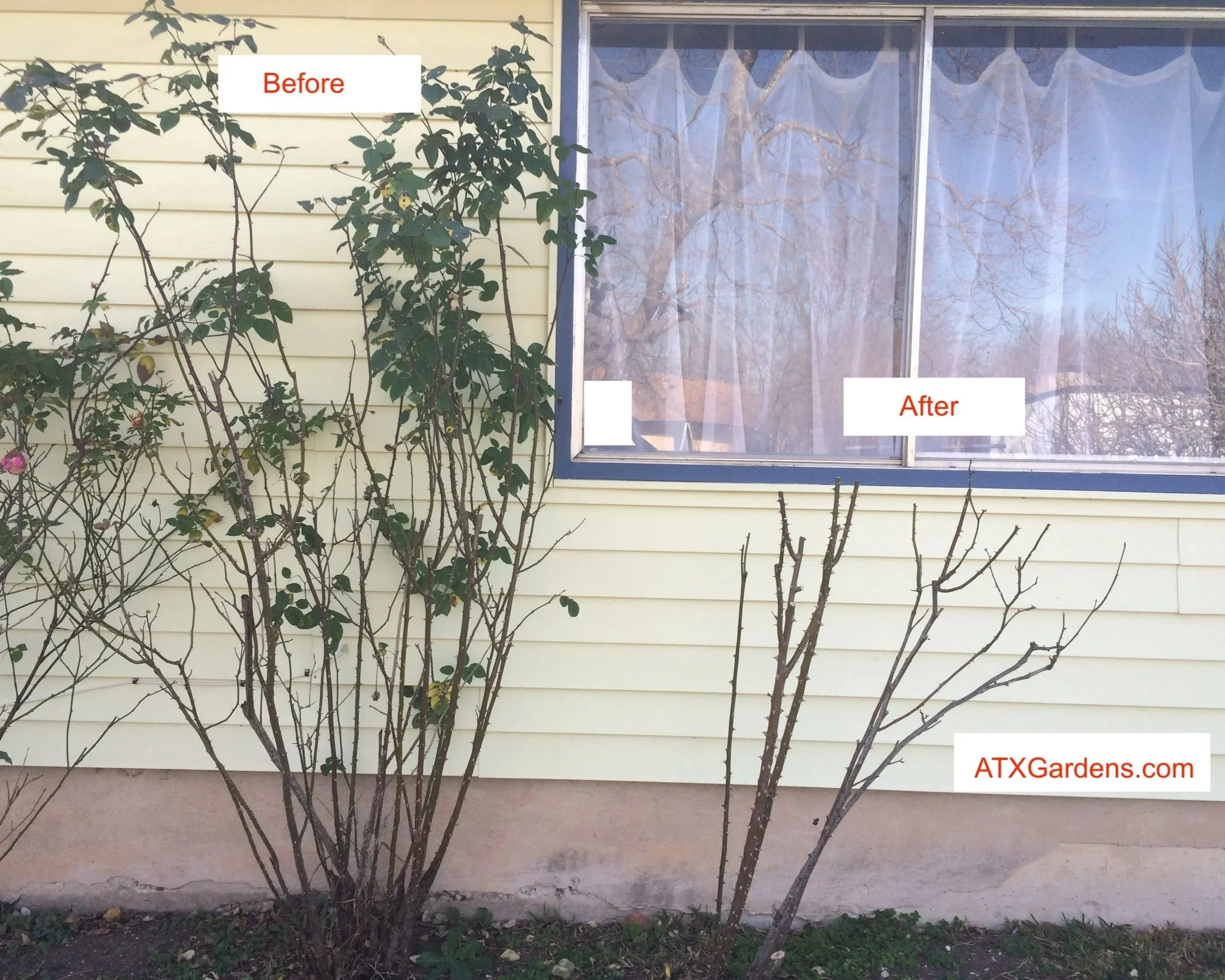
Rose bushes before and after pruning.
🍎 Fruit Trees: Chill Hours, Pruning & Scions
The recent cold snap was great news for fruit trees that require higher chill hours. February is ideal for pruning:
Apples, pears, peaches, plums, nectarines
Japanese persimmons
Key tips:
Don’t remove more than 25% of the tree in one year
Remove growth below the graft union
Favor horizontal fruiting branches
Colleen also explains how to:
Collect fruit tree scions
Store them properly in the refrigerator
Share successful varieties with other gardeners
Prepare for grafting later in spring
February is also a great time to plant:
Stone fruits (peaches, plums, nectarines)
Pome fruits (apples, pears, quince)
Nut trees (pecans, walnuts)
🌼 Perennials & Bulbs: Cut Back or Wait?
Now that we’ve had a true freeze, it’s clearer which perennials need cutting back. February is a good time to prune, but there are tradeoffs:
Pros of cutting back now:
Easier before new growth begins
Less work in March
Cons:
New growth can be damaged by late freezes
Old stems provide habitat for insects
Wildlife gardeners may wait until closer to March 1. Cool-season perennials and bulbs like yarrow, spiderwort, and Dutch iris may look damaged but often recover—leave them alone for now.
🥕 Vegetable Garden: Reset or Replant
February is decision time in the vegetable garden. After freeze damage, you can:
Clear beds and prep for March planting
Replant cool-season greens and root crops
Great February crops include:
Lettuce, collards, carrots, beets, radishes
Peas (snow peas & sugar snaps — short planting window!)
🧅 Onions, Potatoes & Spring Prep
February is perfect for:
Planting onion sets (4–6 inches apart)
Prepping beds for potatoes (planting starts soon)
Potato prep tips:
Double-dig soil 12 inches deep
Add compost
Potatoes prefer slightly acidic soil — use soil sulfur + liquid humate
🌱 Seeds, Crowns & Indoor Starts
Now is the time to:
Plant artichokes, asparagus, strawberries, and blackberries from crowns
Start tomatoes, peppers, eggplants, and tomatillos indoors
Plan for March transplanting
📅 Events & Community
February 15 (1–4 PM)
🌳 Central Texas Seed Savers Annual Fruit Tree Scion Swap
📍 Texas Keeper Cider
Bring fruit tree scions, seeds, or just yourself! This is a great opportunity to meet fellow gardeners and share locally adapted varieties.
🔗 Links & Resources Mentioned
Rose pruning gloves: https://www.amazon.com/dp/B0108IKWSI?tag=atxgardens-20&linkCode=osi&th=1&psc=1
Orchard Lopper: https://www.amazon.com/dp/B0092KF3C4?tag=atxgardens-20&linkCode=osi&th=1&psc=1
Texas Organic Vegetable Gardening Book: https://www.amazon.com/dp/0884158551?tag=atxgardens-20&linkCode=osi&th=1&psc=1🌼
Stay Connected
For more Central Texas gardening guidance, visit http://ATXGardens.com , follow Colleen on Instagram @ATXGardens_, and subscribe to The ATXGardens Podcast for seasonal, science-based gardening advice tailored to Austin and the surrounding region.